Tips That Actually Change Your Outcome
Most "car shipping tips" articles recycle the same surface-level advice: get multiple quotes, check reviews, read the fine print. Useful starting points — but not the insider knowledge that actually separates a stress-free, cost-effective transport from a frustrating experience. The articles in this collection go a level deeper, covering the tactical decisions, hidden variables, and industry-specific knowledge that experienced shippers use to consistently get better results.
The most impactful car shipping tip we can offer is deceptively simple: flexibility has cash value. Every element of flexibility you can offer — on pickup date, on geographic drop-off point, on transport timeline — translates directly into competitive carrier pricing. A shipper offering a 7-day pickup window in a popular corridor will pay 10-20% less than the same shipper demanding pickup on a specific Thursday. That's not a small difference on a $1,200 quote.
Avoiding the Bait-and-Switch
The bait-and-switch is the auto transport industry's most prevalent scam, and it's worth calling out clearly because it affects more customers than any other issue. The mechanics: a broker quotes you an artificially low price — $200 to $400 below realistic market rate. You pay the deposit. They list your vehicle on the carrier network at that price, which no carrier will accept. Days pass, your pickup window comes and goes, and the broker calls to tell you "prices have gone up" or "the carrier fell through" and demands significantly more money to proceed.
The protection is straightforward: don't choose the lowest quote. Discard the lowest and the highest; award your business to a company in the realistic middle. Ask explicitly: "Is this a guaranteed price or an estimate?" A guaranteed price means the rate is locked regardless of whether finding a carrier at that rate takes extra time. An "estimated" price is the broker's wishful thinking about what they might be able to negotiate with a carrier.
Pre-Transport Vehicle Preparation Checklist
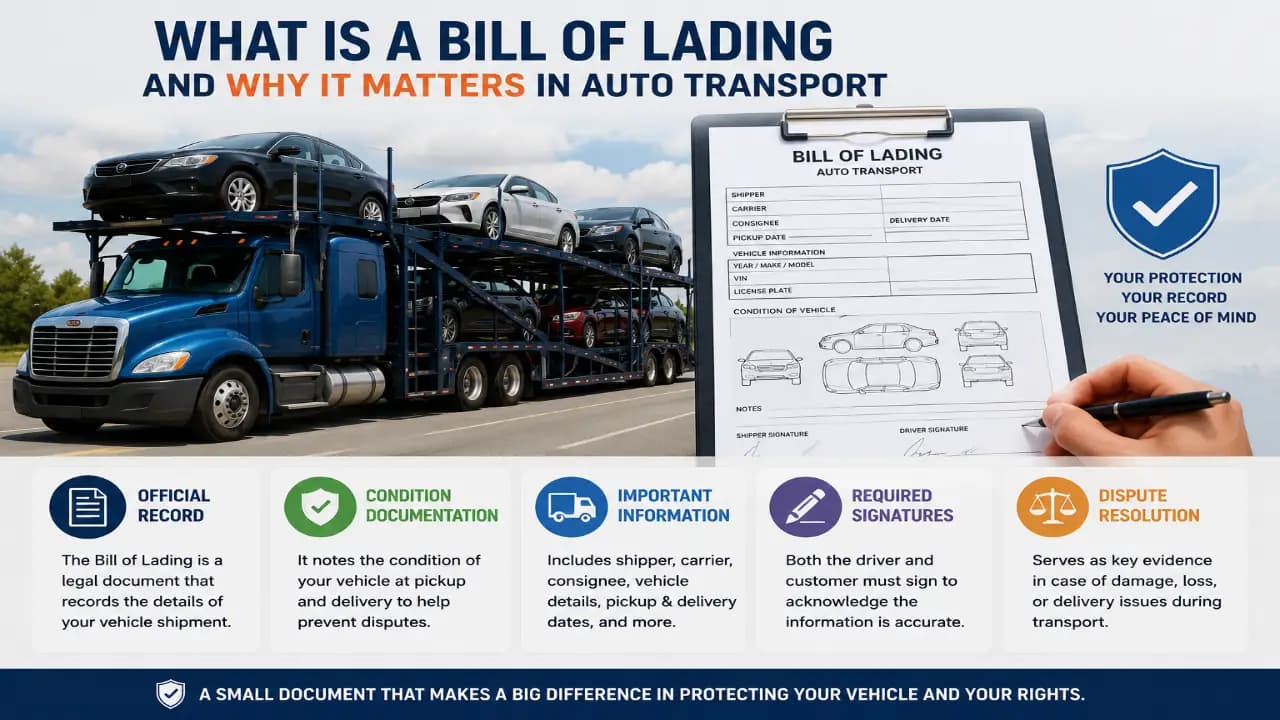
Proper vehicle preparation prevents the most common transport complications. Before your carrier arrives: wash the exterior thoroughly so the pickup inspection can document existing condition accurately; photograph every panel with timestamps; reduce gas to one quarter tank (lighter, safer, required by most carriers); remove all personal belongings including garage openers, toll tags, and loose items; disable alarm systems and provide deactivation instructions; document any pre-existing mechanical issues or known quirks the driver should know about.
This preparation takes about an hour. Skipping it creates real risks: a missed damage documentation that becomes a disputed claim, an alarm that goes off repeatedly during transit and irritates the driver, personal items that shift during transport and cause interior damage, or a driver who shows up to a car with mechanical issues that weren't disclosed, potentially leading to load rejection and rebooking fees.