Why Vehicle Preparation Matters More Than Most Shippers Realize
Vehicle preparation is universally underestimated by first-time shippers and consistently well-executed by experienced ones. This is not accidental — the people who've shipped vehicles before understand from direct experience that a well-prepared vehicle moves through the transport process with significantly fewer complications, and a poorly prepared vehicle creates problems at every stage from pickup documentation to delivery inspection.
The preparation requirements aren't arbitrary. They exist for specific, practical reasons: washed vehicles allow accurate condition documentation, quarter-tank fuel levels reduce weight and fire risk, removed personal items prevent cargo licensing violations and interior damage, disabled alarms prevent operational disruption, and mechanical disclosures prevent load rejections on pickup day. Understanding the "why" behind each requirement makes it much easier to execute consistently.
Step-by-Step Preparation Protocol
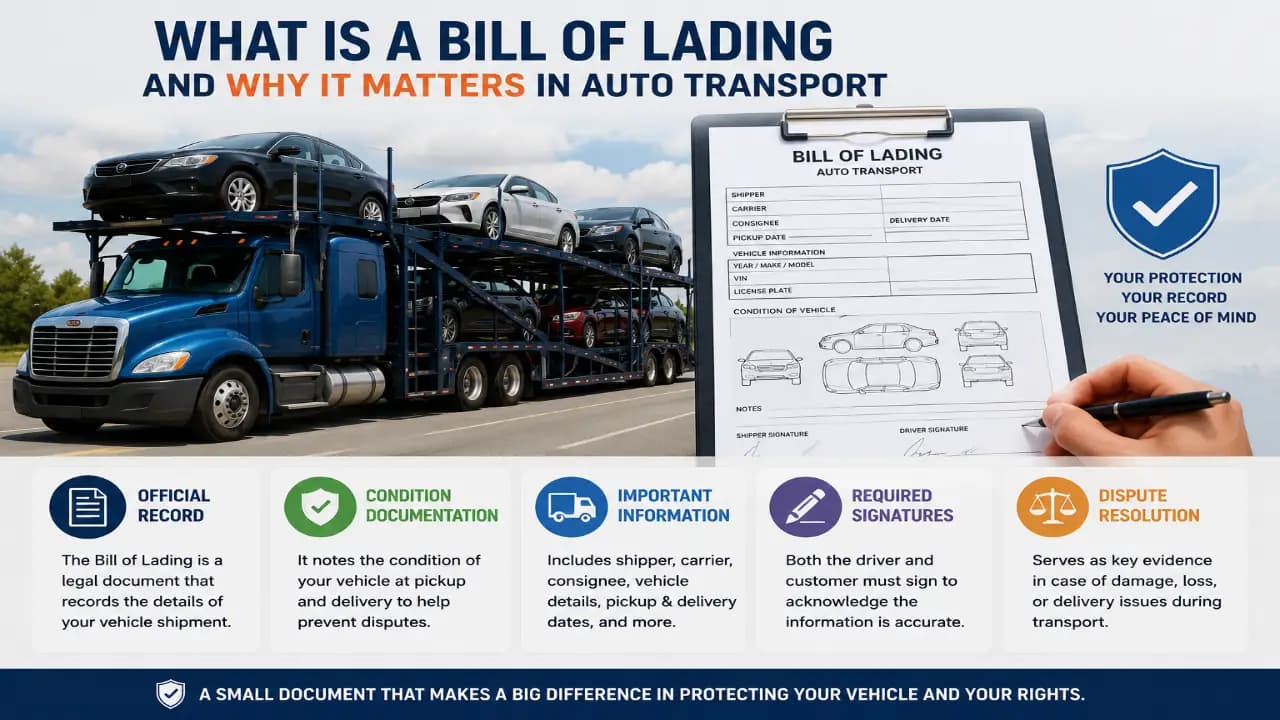
At least 24 hours before your scheduled pickup window, begin vehicle preparation. Wash the exterior including the wheel wells. If you typically park outside, clean the undercarriage as well — the driver will document it during the BOL inspection and clean surfaces make the process more accurate. After washing, complete your photographic documentation immediately while the surface is clean.
For the photographic record, get close. You want to capture paint imperfections that would be missed by a 10-foot distance photo. Document every existing chip, scratch, and scuff, no matter how minor. The effort invested here is directly proportional to your ability to dispute any delivery damage claim — photos you took before pickup are the gold standard evidence in any damage dispute.
The night before pickup, reduce fuel to one quarter tank if it's currently higher. Remove everything from the interior including the trunk, glove compartment, and any door pockets with items that could shift. Remove the toll tag from the windshield. Test the alarm deactivation sequence and write it down clearly to hand to the driver. Double-check tire pressure with a gauge. If you have a dashcam, remove the SD card or the device entirely.
What to Tell the Driver at Pickup
Beyond the BOL inspection, a brief verbal handoff to the driver covers the practical details that make loading and transit smoother. Tell them about any known mechanical quirks — a battery that can be temperamental in cold weather, a driver's door that needs a specific motion to close fully, a standard transmission car that needs to be started in a particular way. Tell them the alarm deactivation code or sequence in writing, not verbally. Confirm whether the car is in the correct gear and with the parking brake set per the protocol you've agreed on for secured storage on the trailer.
These 5 minutes of verbal handoff prevent a significant percentage of the minor complications that arise during transit. A driver who knows your car's quirks handles it confidently; a driver operating blind makes do and occasionally makes mistakes. The time investment is trivial relative to the risk reduction it provides.