The Complete Car Shipping Resource
Car shipping combines logistics, market dynamics, and legal requirements into a service that most people only use once or twice in their lifetime. The articles in this collection are designed to build your working knowledge of every aspect of the car shipping process — from understanding how quotes are calculated to executing a smooth delivery inspection that protects you against any damage claims disputes.
Car shipping in the United States is governed by the Federal Motor Carrier Safety Administration (FMCSA), which licenses both brokers (as property brokers) and carriers (as motor carriers). Every legitimate participant in the industry has a verifiable DOT and MC number that you can look up in the FMCSA's public database. This is the single most effective screen against fly-by-night operations and fraudulent listings.
The Most Common Car Shipping Questions Answered
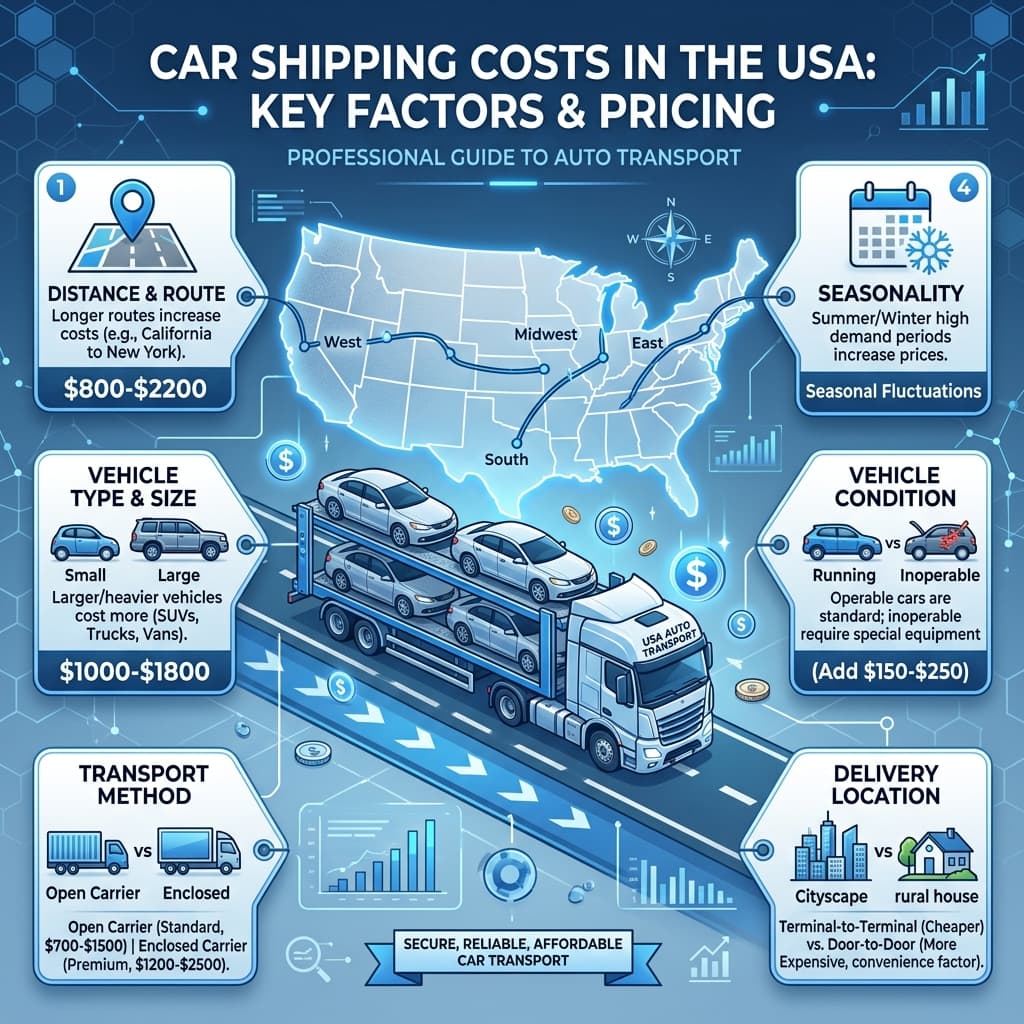
How much does car shipping cost? The average cross-country car shipping quote in the US ranges from $900 to $1,600, depending on the specific route, vehicle size, service type, and current market conditions. Shorter regional hauls run $350 to $800. These are marketwide averages — your specific quote will depend on current carrier availability on your exact route, delivery speed requirements, and whether you choose open or enclosed transport.
How long does car shipping take? Transit time is primarily a function of distance. Regional hauls (under 500 miles) typically complete in 1 to 3 days. Mid-distance hauls (500 to 1,200 miles) take 3 to 7 days. Full cross-country transport (1,500+ miles) typically runs 7 to 14 days. These are transit times, not total process times — add 1 to 5 days for dispatch before the carrier actually picks up your vehicle.
Choosing the Right Car Shipping Company
The car shipping marketplace is crowded and not uniformly trustworthy. From "bait and switch" brokers who quote artificially low prices to lock in your deposit, to carriers with inadequate or fraudulent insurance, to outright scams targeting customers on Facebook Marketplace car sales — the list of ways to have a bad car shipping experience is long. Protecting yourself starts with the basics: verify FMCSA licensing, confirm cargo insurance documentation, choose a company with documented reviews on third-party platforms, and never pay 100% of the cost before your car is picked up.
On the positive side, the majority of companies operating in this space are legitimate and reliable. The industry has meaningful professional standards, federally-mandated insurance requirements, and legal protections under the Carmack Amendment for interstate shipments. Working with a reputable broker who manages your carrier vetting process is the most effective way to access an experienced, insured carrier without having to evaluate hundreds of drivers yourself.