Open Transport: The Backbone of the Auto Shipping Industry
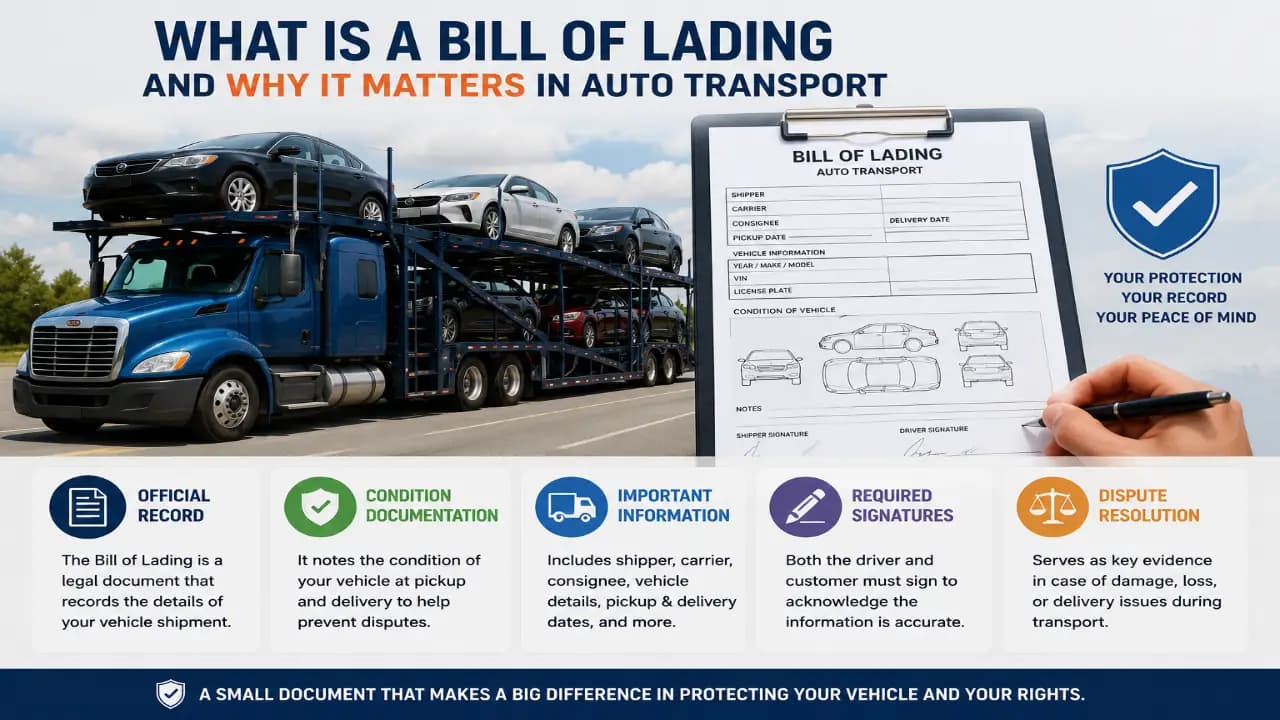
Open auto transport is how the vast majority of vehicles — roughly 90 percent of all professionally shipped cars — move across the United States every year. It's the service you've seen on the highway: a multi-level car hauler stacked with 7 to 9 vehicles, moving steadily down the interstate. This is the industry standard for a reason. It's safe, highly efficient, widely available, and significantly more affordable than enclosed alternatives.
The term "open" refers to the fact that the carrier trailer does not have side walls or a roof — vehicles ride fully exposed to the elements during transit. For most vehicles, this exposure is entirely inconsequential. Your daily driver, family SUV, or standard commuter car is designed to operate in weather. A journey in the open air on a carrier trailer presents no more meaningful exposure risk than the car's normal operating environment.
What Open Transport Actually Looks Like
Most open carriers are multi-level auto haulers carrying 7 to 9 vehicles per load. The trailer uses hydraulic decking systems that adjust height to accommodate different vehicle types and to maximize vertical clearance. Your vehicle is loaded and secured with wheel net or strap tie-down systems anchored to the trailer deck. Modern securing systems are highly effective — vehicles don't shift during normal highway transit.
The loading position on the trailer matters somewhat. Vehicles loaded on the lower level are more exposed to road debris kicked up by the truck's own wheels and the wheels of other vehicles on the highway. Vehicles on the upper deck get more wind exposure but less road debris contact. Drivers typically position vehicles based on clearance, weight distribution, and pickup/delivery sequence rather than customer preference — but it's worth understanding that position on the trailer varies by load.
Open Transport vs. Enclosed: Making the Right Call
The decision between open and enclosed transport comes down to one question: what are the consequences if your vehicle sustains minor cosmetic damage during transit? For a 2020 Honda Accord, the answer is simple — the car is worth $22,000, has a replacement cost fully accessible through insurance, and a stone chip is a $150 touch-up. Open transport is clearly correct. For a 1969 Dodge Charger in factory-original condition, the answer is completely different — the paint may be unrestorable, the vehicle is potentially irreplaceable, and the damage cost would dwarf the enclosed shipping premium many times over.
For most individual shippers moving their primary or secondary vehicles for personal relocations, seasonal moves, online purchases, or military PCS moves, open transport is the appropriate, cost-effective choice. It's only the specific subset of vehicles where cosmetic perfection is the primary concern where enclosed transport's premium is clearly justified.