California to Texas Auto Transport Guide
Shipping a car from California to Texas? Get real pricing, transit times, route insights, and expert tips for the LA to Dallas, SF to Houston, and San Diego to San Antonio corridors.
Loading...
Comprehensive auto transport articles covering pricing, carriers, safety, and everything you need to ship your vehicle across the country with confidence.

Shipping a car from California to Texas? Get real pricing, transit times, route insights, and expert tips for the LA to Dallas, SF to Houston, and San Diego to San Antonio corridors.

Just bought a car online and need to get it home? Here's the complete guide to shipping a vehicle purchased from Facebook Marketplace, eBay Motors, or any online seller.

Not sure whether to choose door-to-door or terminal-to-terminal auto transport? This honest comparison breaks down the real costs, convenience, and risks of each.

Texas continues to be a top relocation destination, but the 2026 housing market plays by new rules. From shifting property taxes to auto transport logistics, here is what you need to know before you pack your bags.

Moving doesn't have to be a chaotic nightmare. Our comprehensive 8-week moving checklist breaks the process down into manageable, weekly steps to ensure a flawless transition.

May 2026 is shaping up to be the most chaotic moving month in years. Learn why the auto transport industry is bracing for impact, and how you can book your car shipment before prices skyrocket and capacity vanishes.

Don't sign that transport contract until you understand your insurance coverage. We break down carrier liability, gap coverage, and how to protect your vehicle.

Wondering what to expect after booking your car shipment? Let's break down the dispatch process, the welcome call, preparation, transit, and delivery day.

Ever wonder why car shipping quotes fluctuate wildly? We reveal the hidden factors that drive auto transport pricing and share insider strategies to save money.

Shipping a car from Florida to New York in 2026? Get real cost ranges, transit times, seasonal tips, and the best ways to save on this popular route.

Planning a state-to-state move? Discover how to ship your car safely, cheaply, and stress-free with this complete relocation guide from a 20-year industry expert.

Shipping an EV? Learn the unique battery, charging, and carrier requirements for Tesla, Rivian, and other electric vehicles before you book.

Find out exactly how long car shipping takes in 2026. Real timelines by distance, transport type, and season from a 20-year industry expert.

Discover the cheapest ways to ship a car cross-country in 2026. A 20-year industry veteran reveals 9 insider strategies to cut your shipping costs by up to 40%.

Get real 2026 car shipping costs broken down by distance, vehicle type, and service level. Our 20-year industry expert reveals insider pricing tips most companies won't share.

Planning to ship your car? This comprehensive guide covers everything from choosing the right service to preparing your vehicle for transport.

Worried about shipping your car? A 20-year industry veteran reveals the real safety record, insurance facts, and insider tips to protect your vehicle during transport.

Learn exactly how to prepare your car for transport. A 20-year industry expert shares the ultimate checklist to ensure a smooth, damage-free shipping process.

Bought a car on Facebook Marketplace across state lines? Learn exactly how to ship it home safely with expert tips on verification, scam avoidance, and booking transport.

Wondering when is the best (and cheapest) time to ship a car? We break down how seasonal demand, snowbirds, and weather affect your auto transport rates.

Planning to pack your car with boxes before shipping it? Before you do, understand the strict DOT rules, weight limits, and hidden risks of shipping personal items inside your vehicle.

Lost your keys? Bought a salvage car at auction without them? Learn how auto transport companies handle keyless vehicles, the extra costs involved, and what you must do to prepare.

You don't have to be present for auto transport pickup or delivery — but someone does. Learn who can represent you, what they must do, and how to protect your claim rights.

Yes — shipping a financed vehicle is completely normal. Learn what a lien means for auto transport, when lender approval is needed, and how insurance works for liened vehicles.

Avoid surprise charges and bait-and-switch tactics when shipping your vehicle. Learn how to spot hidden car shipping fees and get a legitimate, transparent quote.

Deciding whether to drive your car across the country or hire a professional? We break down the real math, hidden costs, and safety factors to help you make the right choice.

A detailed, plain-language walkthrough of the entire auto transport process, from securing a quote to final delivery, ensuring a stress-free move.

Don't let predatory brokers steal your money. Learn the top 10 warning signs of auto transport scams and how to protect your vehicle.

Wondering how much fuel to leave in your car before shipping? We explain the 1/4 tank rule, federal weight limits, and safety protocols.

Confused about brokers and carriers? We break down exactly who does what in the auto transport industry and why you probably need both.

Protect your high-end investment. Learn the key differences in enclosed transport, insurance requirements, and how to properly ship a luxury car.

Moving to college? Learn how to safely ship your car to campus without breaking a student budget, plus crucial tips for dorm parking lot delivery.
Auto transport — the professional shipping of privately owned vehicles by licensed motor carriers — is a $12 billion industry that moves roughly 15 million vehicles across the United States every year. Despite this scale, most people who use the service are first-timers with limited knowledge of how it actually works. The articles tagged here cover the full spectrum of the auto transport experience, from your very first quote to the final delivery inspection.
Understanding auto transport starts with recognizing what it is and what it isn't. An auto transport broker — the company you most often shop with online — is a licensed logistics coordinator, not a trucking company. They operate on national or proprietary load board networks, matching your vehicle with available, qualified carriers running the right route at the right time. The carrier — the actual truck that moves your vehicle — is an independent motor carrier, federally licensed under FMCSA regulations, carrying mandatory cargo insurance.
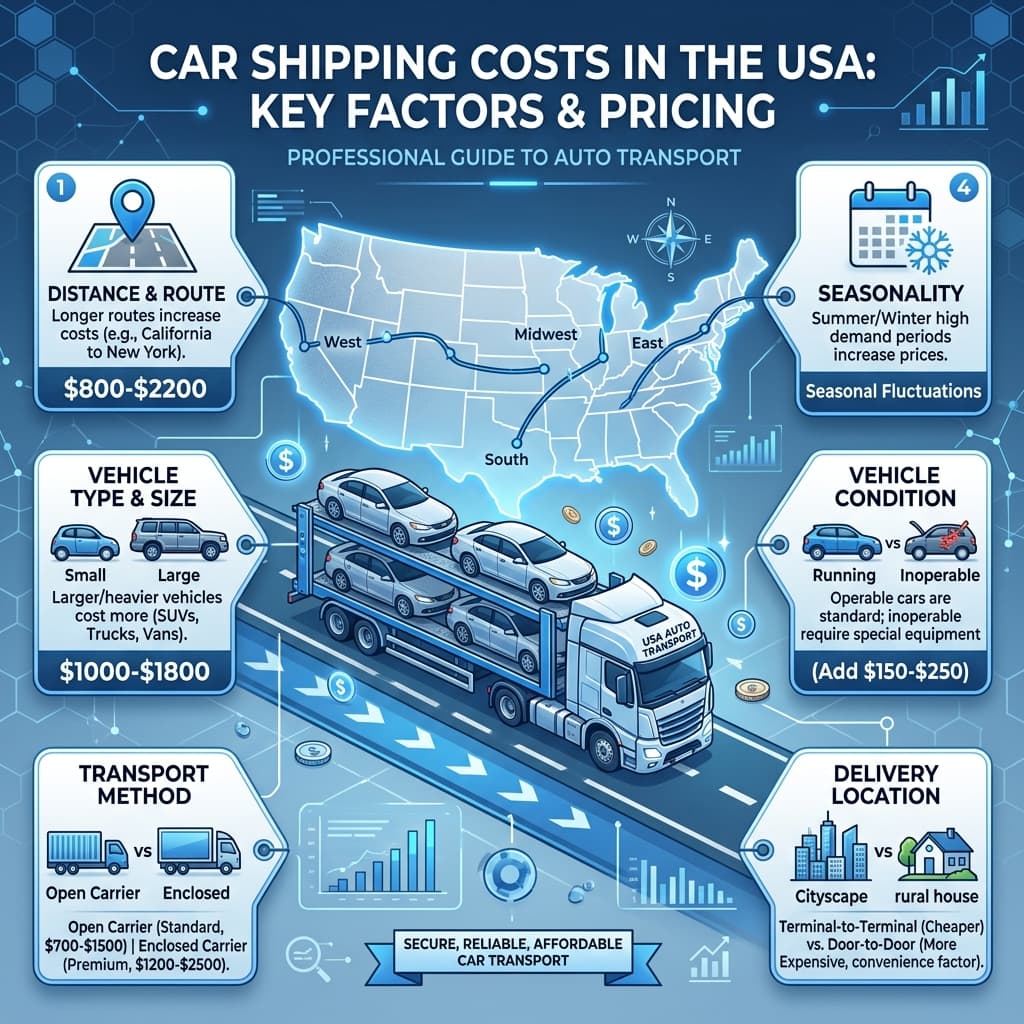
Pricing in auto transport is dynamic, not fixed. It responds in real time to supply and demand on specific routes. A Los Angeles to Miami haul might be $1,100 in January and $1,450 in July during peak moving season. A New York to Florida route might be $800 in the summer and $1,400 in October when snowbird traffic overwhelms southbound capacity. Understanding these dynamics is the starting point for shipping strategically rather than reactively.
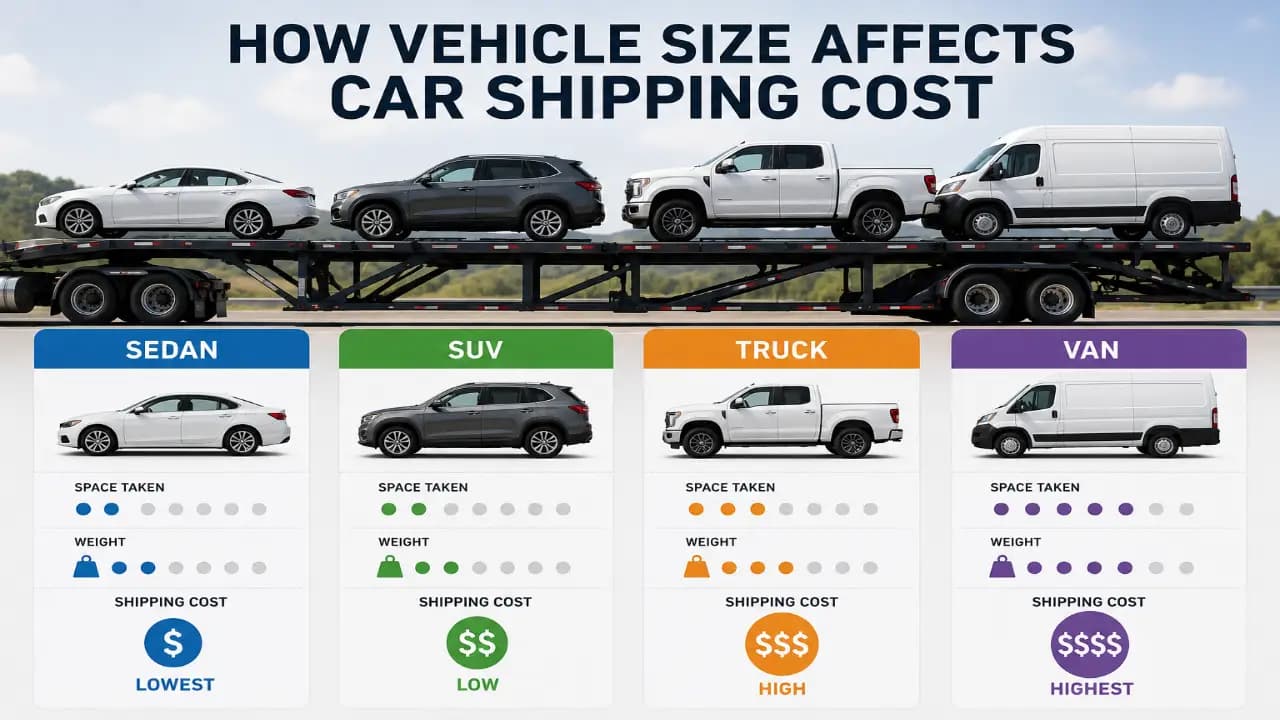
The base rate per mile is the primary pricing driver. Short hauls (under 500 miles) price at a higher per-mile rate — often $1.00 to $1.50 per mile — because the fuel-to-revenue ratio is less efficient than long-haul runs. Cross-country moves (over 1,500 miles) typically price at $0.40 to $0.75 per mile. Vehicle size and type matter significantly; a full-size pickup truck takes more space and weight capacity than a compact sedan, increasing the base rate accordingly.
Once you book your vehicle, the clock starts on the dispatch process. Your broker's team lists your load on a carrier network and begins negotiating with qualified drivers running your route. This process typically takes 1 to 5 days, depending on route popularity and your pickup flexibility. Routes like LA to Phoenix or Dallas to Atlanta dispatch very quickly — those corridors have constant carrier traffic. Rural routes in Montana, Wyoming, or northern New England can take 5 to 10 days to dispatch because carrier traffic is sparse.
When a carrier accepts your load, you receive a confirmation with the carrier's DOT number, company name, driver's phone number, and an estimated pickup window. This begins the most important communication phase: direct coordination with your driver. They'll call you approximately 24 hours before arrival to confirm the exact pickup window, discuss your delivery address logistics, and answer any last-minute questions.
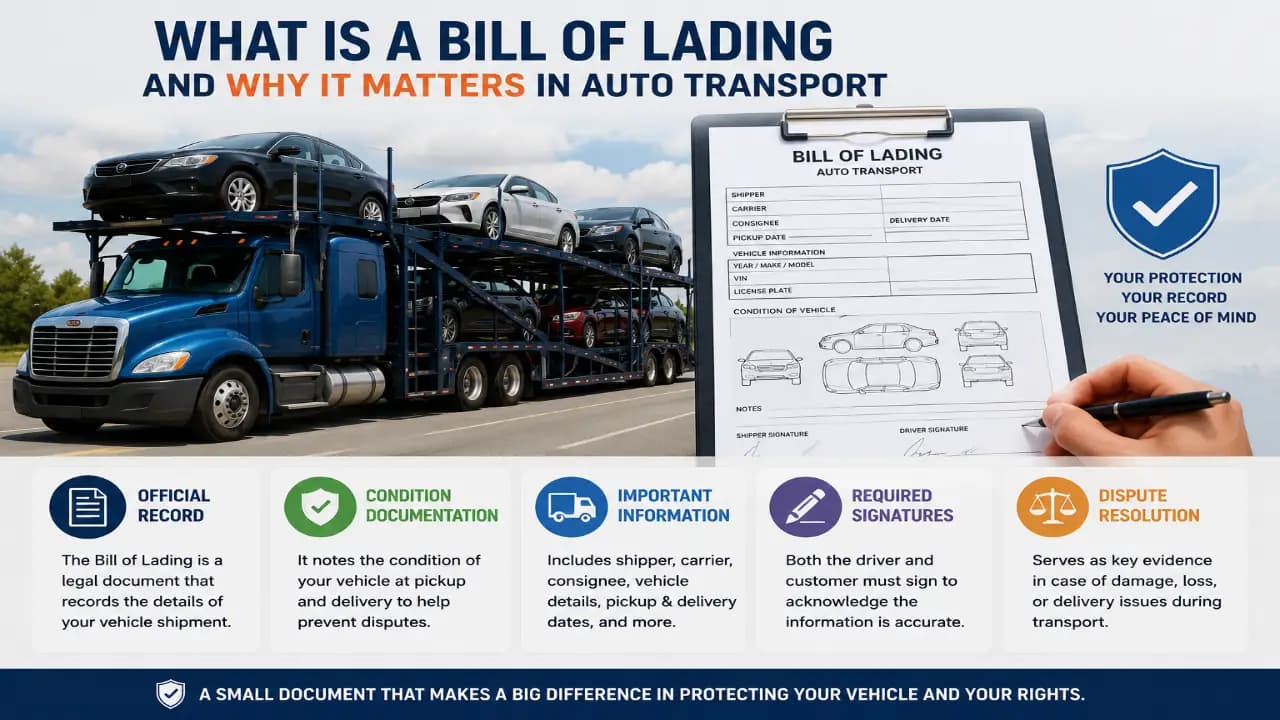
Pickup day is where preparation meets execution. Your vehicle should be washed (so existing condition is clearly visible), photographed from every angle, stripped of personal belongings, and fueled to exactly one-quarter tank. The driver performs a walk-around inspection, documents existing condition on the Bill of Lading, and both parties sign. At delivery, you or a designated representative performs the same walk-around against the pickup BOL record. Any new damage must be noted on the delivery BOL before signing — your signature constitutes acceptance of the delivery condition.