Preparation Is the Foundation of a Successful Transport
The biggest differentiator between a smooth auto transport experience and a complicated one is almost always preparation — not carrier quality, not timing, not luck. Customers who follow a disciplined preparation protocol consistently have cleaner pickups, cleaner deliveries, and far fewer disputes. Customers who hand over their car unprepared create avoidable problems: undisclosed mechanical issues that delay pickup, missing documentation that complicates damage claims, personal items that cause interior damage, and alarm systems that harass drivers and neighboring vehicles for days.
None of this preparation is technically difficult. It takes about 60 to 90 minutes before pickup day. The return on that investment is a dramatically smoother experience and a much stronger legal position if anything unexpected occurs during transit.
The Complete Pre-Transport Checklist
Exterior: Wash the car thoroughly. Documentation shows condition clearly only on a clean surface — dirt hides scratches and chips that, if missed at pickup, cannot be claimed as transport damage later. After washing, photograph every exterior panel individually. Front bumper, both headlights, hood, both front quarter panels, driver's door, passenger door, rear doors if applicable, both rear quarter panels, trunk lid, roof, both rear lights. Take a video walk-around for approximately 60 seconds. Email these to yourself or upload them immediately to create a timestamped record.
Interior: Remove all personal belongings. Carriers are not licensed to haul household goods, and extra items inside the vehicle are not covered by the carrier's cargo insurance. Items loose in the cabin shift during transit and can cause interior damage (a toolbox sliding across the rear seat, golf clubs banging against door panels). Remove toll tags, parking passes, GPS devices, and any dash cameras — the latter specifically because some drivers are uncomfortable with in-cab recording during loading and unloading.
Mechanical: Reduce the fuel level to approximately one quarter tank. A full tank adds roughly 100 pounds of weight and represents a fire hazard level of flammable liquid significantly beyond what's needed for loading and unloading. Check tire pressure to factory specification — underinflated tires are more vulnerable to sidewall damage during the forces of loading and securing. Retract any custom antenna. If the vehicle has any known mechanical quirks — a starter that requires pumping the clutch in a specific way, a door handle that must be lifted while rotating — write this information down and give it to the driver.
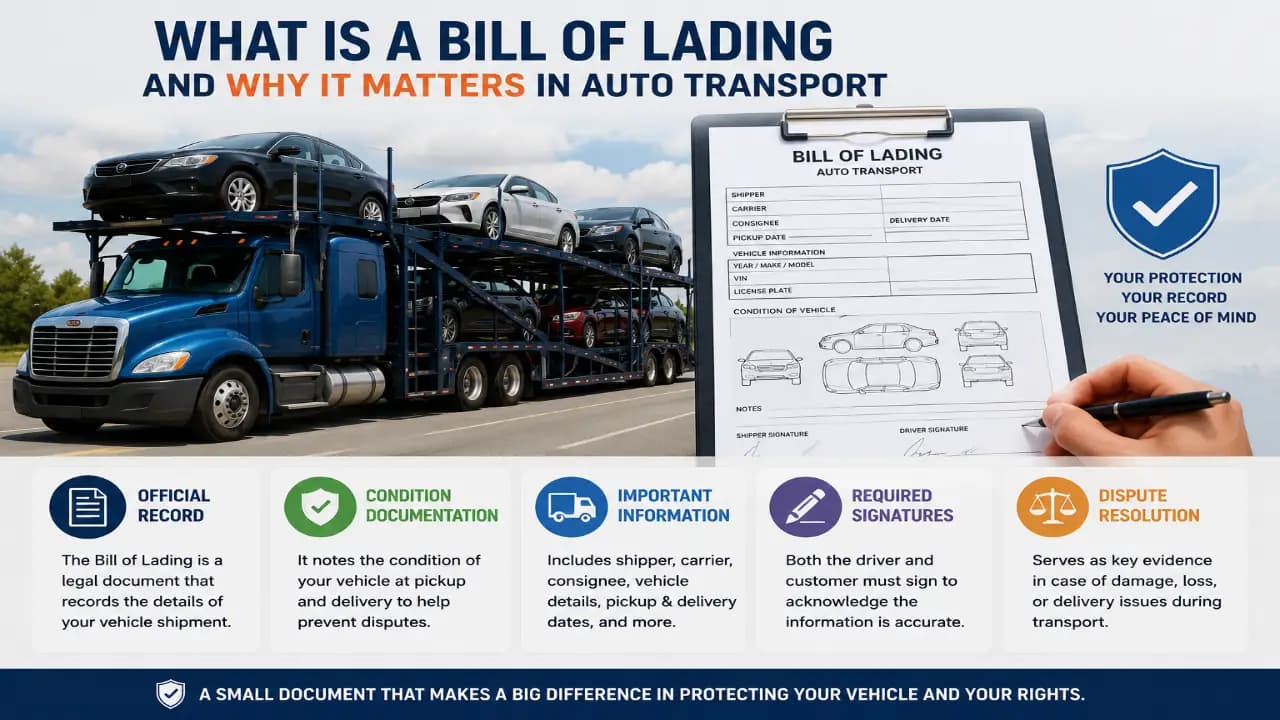
The Bill of Lading Inspection: Do Not Rush This
The BOL inspection is the most important 10 minutes in the entire transport process. Both you and the driver walk the entire exterior of the vehicle and agree on the documentation of every existing mark. Take your time. Use your cell phone light on overcast days. Check areas that are easy to miss: the lower rocker panels, behind the rear bumper, the inner door jambs when doors are open, around the wheel well lips. If the driver is being perfunctory, slow down and be thorough. Every undocumented pre-existing scratch is a potential disputed claim later.