Your Vehicle Deserves Professional Care During Transport
Vehicle care during transport is a shared responsibility between you and the carrier. Your responsibilities — proper preparation, accurate condition documentation, appropriate fuel level, personal items removal — create the foundation. The carrier's responsibilities — proper securing, safe driving, careful loading and unloading — build on that foundation. Understanding both sides of this equation gives you a clear picture of what good vehicle care looks like and how to ensure it for your shipment.
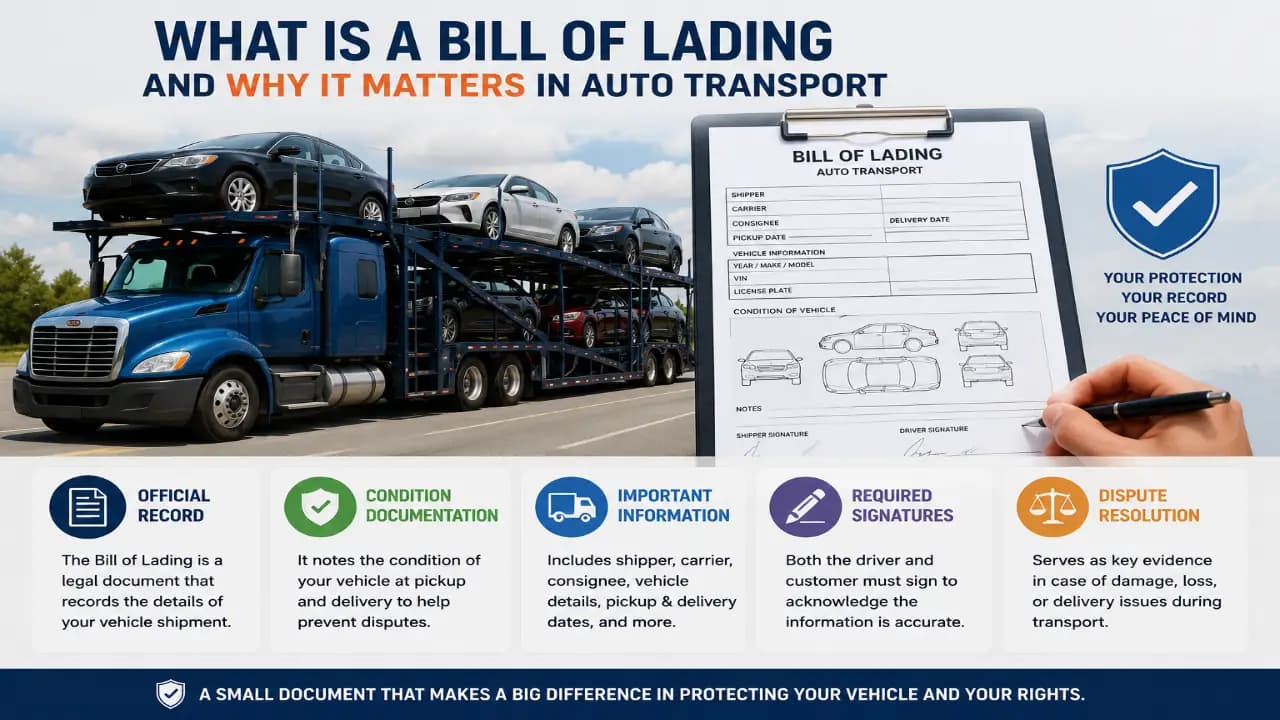
The most significant vehicle care action you control is pre-transport documentation. A thorough, photographic record of your vehicle's pre-transport condition is both a practical preparation step and a legal protection. Without it, proving that any damage discovered at delivery actually occurred during transport — rather than being pre-existing — becomes significantly more difficult. With it, your position in any dispute is clear and legally supported.
Carrier Vehicle Care Standards
Licensed motor carriers operating under FMCSA regulations are required to follow specific vehicle handling protocols. Vehicles must be properly secured on the transport trailer to prevent movement during transit. Securing hardware must meet minimum rating requirements for the weight class of vehicle being transported. Drivers must inspect their cargo at each rest stop as part of federally mandated operational protocols.
When it comes to enclosed transport — particularly for classic and high-value vehicles — premium carriers supplement these baseline requirements with specialized protocols. Soft-tie wheel securing systems, hydraulic lift gate loading for low-clearance vehicles, manual inspection at each fuel stop, and carrier-specific protocols for battery-electric vehicles or exotic drivetrains. These are the standard of care appropriate for vehicles where basic compliance isn't sufficient.
Delivery Day Vehicle Care
Vehicle care doesn't end when the carrier arrives at your door. The delivery inspection is the final link in the care chain. Inspect your vehicle systematically before signing the delivery Bill of Lading — starting at the front bumper and working methodically around the entire exterior. Use additional lighting if needed. Check contact points that are prone to damage: door edges, rocker panels, bumper corners. Compare what you see to both the pickup BOL and your pre-shipping photographs.
If your vehicle arrives dirty from road travel (expected with open transport), a brief wash at a self-service car wash before the final inspection is worth the 10 minutes — it lets you see the paint clearly without road grime masking potentially new marks. This is a standard professional practice for high-value deliveries and a smart habit for any vehicle arriving via open carrier after a long transit.