Tips That Actually Move the Needle
The internet is full of generic "car shipping tips" that amount to little more than "get multiple quotes" and "read the contract." Those aren't tips — they're baseline expectations. The articles in this section contain the kind of insider knowledge that you'd normally only get from someone who books auto transport for a living and knows what actually goes wrong between quote and delivery.
We've been in this industry long enough to see every mistake made by every type of shipper: the first-time mover who paid $400 extra for a last-minute booking, the snowbird who always ships in peak season and wonders why it costs so much, the eBay buyer who signed a clean delivery BOL and forfeited his damage claim, and the luxury car owner who put a $120,000 Ferrari on an open carrier and regretted it. These tips exist to prevent those outcomes for you.
The Single Biggest Money-Saving Move: Date Flexibility
Every pricing conversation in auto transport comes back to flexibility. Carriers want to fill trailers efficiently. When a dispatcher has a truck heading from Seattle to Phoenix with one open spot, they're looking for the easiest, fastest match — and that means choosing a car owner who gives them a wide pickup window over one who demands a specific Tuesday pickup.
In practical terms, offering a 5-7 day pickup window instead of a fixed date can reduce your quote by $75 to $250 on a typical cross-country haul. That's a meaningful saving that requires nothing from you except flexibility. If your schedule allows it, this is always the first tip we tell customers who ask how to cut costs.
Book with Enough Lead Time
Last-minute transport requests are the most expensive requests in the industry. If you call on Monday needing your car picked up on Wednesday, you're asking a broker to solve a nearly impossible logistics puzzle: find a qualified, insured carrier, running the exact right route, within 48 hours, with an empty spot on their trailer. It can be done — but it requires paying an expedited premium of $150 to $400 above market rate.
The sweet spot for booking is 14 to 21 days before your desired pickup window. This gives your broker's dispatch team enough time to monitor the specific lanes you need, make competitive offers to multiple carriers, and match your vehicle with the optimal route without panic pricing. For snowbird-season routes (October-November and March-April on Florida corridors), booking 3-4 weeks ahead is essentially mandatory if you want to avoid premium rates.
Open Transport: The Smart Default
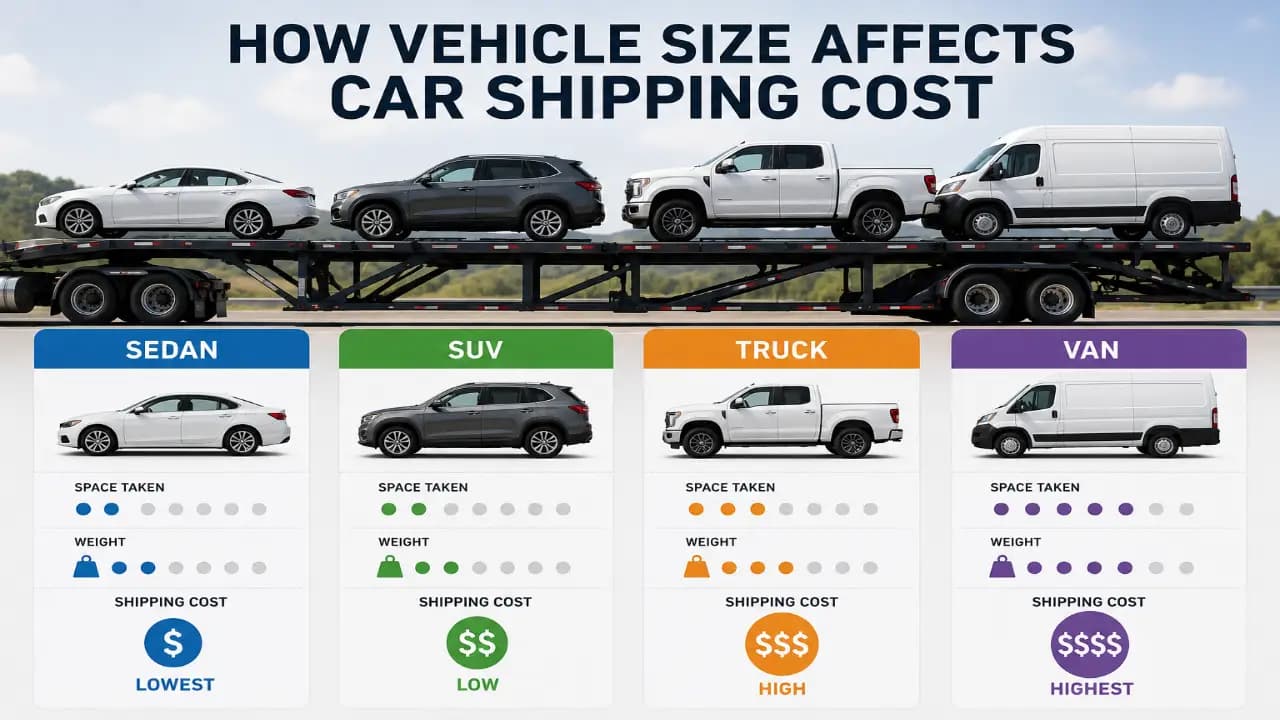
If you look at what drives enclosed transport pricing — specialized equipment, dedicated trailers, lower vehicle capacity per load, experienced drivers certified for high-value cargo — you'll understand immediately why it costs 30-50% more than open transport. For a $28,000 Honda Pilot or a $45,000 Ford F-150, that premium is genuinely difficult to justify. Open transport carries those vehicles safely every day, all over the country. The "exposure to elements" concern is real but minimal — the damage rate on open carriers is well under one percent.
The calculus changes for vehicles where cosmetic perfection is the point: factory showpieces, concours-condition classics, full body-wrapped exotics, or anything with a replacement value that makes even a minor mishap financially painful. For those vehicles, enclosed is absolutely worth the premium. For everyone else, open is the right, pragmatic default.
Verify Insurance Before You Sign Anything
Federal law requires all licensed motor carriers to carry cargo insurance. That's the baseline. What varies significantly is the coverage limit (the maximum payout per vehicle), the deductible (what you pay out of pocket in a claim), and whether specific damages are excluded (like pre-existing damage, acts of nature, or mechanical failures).
Ask any carrier or broker for their Certificate of Insurance before you sign a contract. A legitimate company will provide it instantly; a company that delays, deflects, or charges you for this information is a red flag. Confirm that the coverage per vehicle is appropriate for your car's market value — if you're shipping a vehicle worth $90,000 and the carrier's coverage cap is $75,000 per vehicle, you have a gap. Supplemental coverage is available and worth considering for high-value transports.
The Pre-Shipping Photo Record
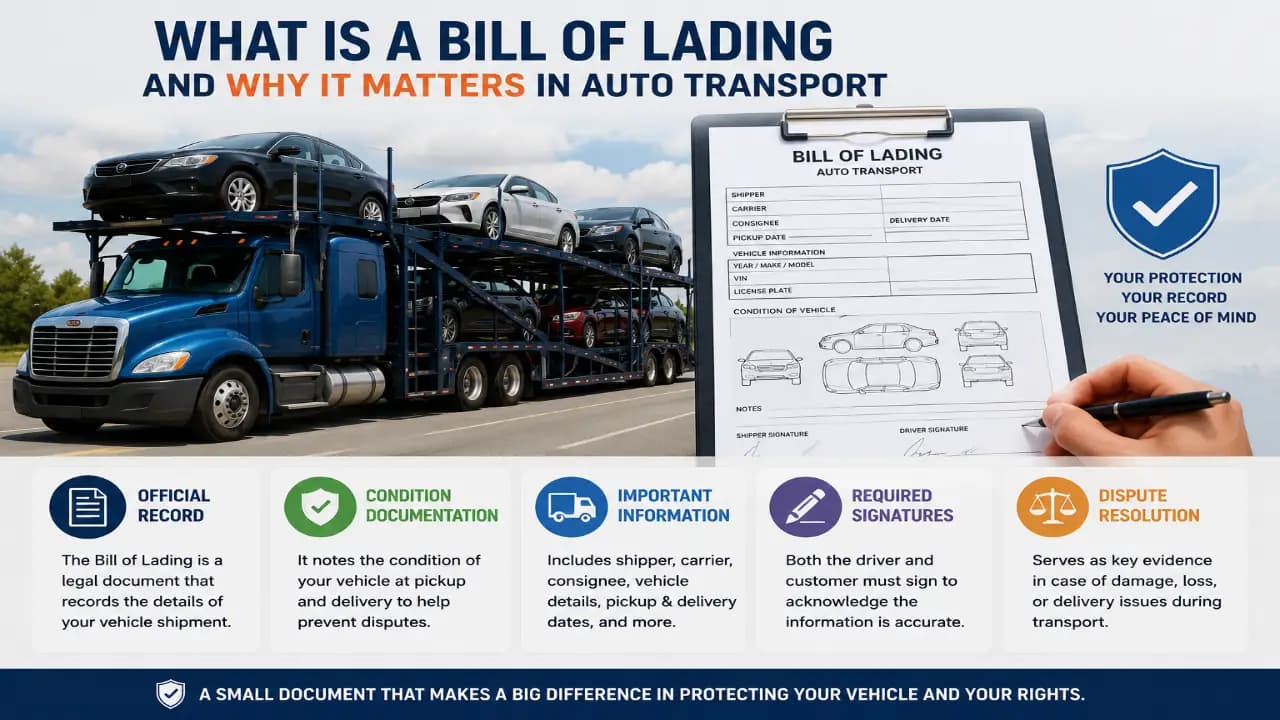
This tip can save you thousands of dollars in a disputed damage claim. Before your vehicle is loaded, photograph every exterior panel individually: front bumper, hood, both front quarter panels, both doors on each side, both rear quarter panels, trunk lid, roof, and all four corners. Do a video walk-around for 60 seconds. Take a photo of every existing scratch, chip, or dent using your phone's close-up camera. Email yourself these photos or upload them somewhere timestamped immediately.
When your vehicle arrives at delivery, compare what you see to these photos and to the pickup Bill of Lading. If new damage exists that wasn't in your photos and wasn't on the BOL, you have clear, timestamped evidence to support an insurance claim. Without this record, a carrier can argue the damage was pre-existing — and they'll often win.
Understanding Your Contract Before You Sign
Auto transport contracts contain provisions that are enforceable the moment you sign, so reading them matters. The most important clauses to look for: the cancellation and deposit refund policy (some companies charge non-refundable deposits up to 30% of the quoted price), the payment method at delivery (almost always cash or certified funds — no personal checks, no credit cards), the dispute resolution clause, and whether there is a price-lock guarantee.
A price-lock guarantee means that the contracted shipping rate will not change. If the contract says "estimated" or "subject to carrier acceptance," that's language that gives a dishonest broker room to claim the price changed after dispatch. Ask explicitly: "Is this price guaranteed or estimated?" The answer tells you everything you need to know about whether you're dealing with a trustworthy company.
Ship Smart, Not Just Cheap
Saving money on auto transport should never come at the cost of reliability or peace of mind. Our tips are designed to help you optimize price within the reliable tier of the market, not to direct you toward the cheapest possible option regardless of quality. The cheapest quote is almost always a problem waiting to happen. Use the tips in these articles to extract the best value from a trustworthy provider — that's the real goal.