Your Complete Resource for Auto Transport Knowledge
Shipping a vehicle across the country — or even across a single state — is not something most people do every day. For the vast majority of our customers, it's a first-time experience filled with unfamiliar terminology, processes, and decisions. That's exactly why we created this category of deep, comprehensive guides: to give you the expertise of a 20-year industry veteran, distilled into clear, actionable steps.
The auto transport industry moves over 15 million vehicles per year in the United States alone. It's a massive, complex logistical network involving independent truck drivers, load boards, broker networks, FMCSA regulations, and real-time pricing based on fuel and supply and demand. Understanding how these pieces fit together is the difference between a smooth, affordable transport and a confusing, costly experience.
What You'll Learn in Our Guide Library
Our guides are written by working logistics professionals — people who have personally coordinated hundreds of thousands of vehicle moves. We write about what actually happens in the industry, not the sanitized marketing version.
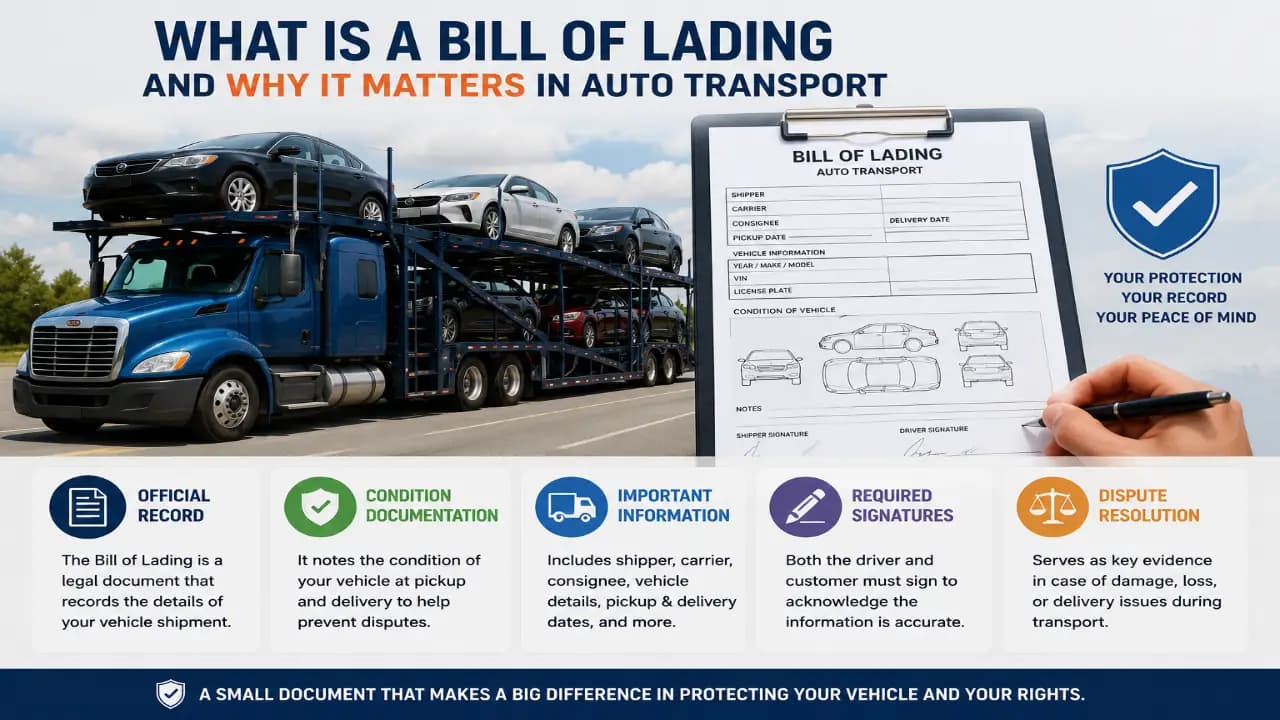
In this collection, you'll find comprehensive walkthroughs covering every major aspect of the auto transport experience. We explain how carriers select routes, why prices fluctuate with the seasons, how to read a Bill of Lading, and what to do if something goes wrong during transit. Each guide targets a specific stage of the shipping process so you always know exactly where to turn.
How to Choose the Right Service for Your Needs
One of the most important first decisions in any auto transport journey is choosing your service type. Open transport is the industry standard and handles roughly 90% of all vehicle moves. It's safe, efficient, and significantly more affordable than the alternative. Enclosed transport, on the other hand, places your vehicle inside a completely sealed trailer — shielding it from weather, road debris, and UV exposure. Enclosed is the correct choice for classic cars, exotic vehicles, pristine low-mileage machines, and anything with a replacement value above $75,000.
Beyond the carrier type, you'll need to decide between door-to-door pickup (the driver comes to you) and terminal-to-terminal service (you drop the vehicle at a facility). For most individual shippers, door-to-door is simply more convenient and often not much more expensive. For rural pickups far from major interstate corridors, a terminal drop-off can save meaningful money.
Timing Your Transport: The Seasonal Reality
Auto transport pricing is heavily influenced by season and geography. Summer is peak moving season nationwide — families are relocating, college students are moving, and demand outstrips available truck space. Snowbird routes between the Northeast and Florida experience dramatic surges in the fall (Northerners heading south) and in the spring (the return migration). If your schedule allows flexibility, shipping during shoulder seasons — late fall, early spring, or mid-winter on non-snowbird routes — often yields significantly lower quotes and faster dispatch times.
Flexibility in your pickup window is arguably the single most effective money-saving strategy available to you. Carriers prefer to build efficient, full loads. If you can offer a 5-7 day pickup window instead of demanding a specific date, you make it vastly easier for dispatchers to match your car with an existing route — and they'll often pass part of those savings on to you.
The Booking Process Demystified
Booking auto transport can feel overwhelming when you're first quoted online. You submit your information, you receive calls from half a dozen brokers, and you're confronted with a range of prices that can vary by hundreds of dollars for the same route. Understanding why this happens is the starting point for navigating it confidently.
The variation you see reflects different market strategies. Some brokers quote artificially low to win your deposit — this is the industry's most common scam, known as the "bait and switch." They'll lock up your car on their load board with a price no carrier will accept, then come back days later claiming prices "increased" and demanding more money. The solution is simple: discard the lowest quote and the highest quote. Award your business to a company in the realistic middle offering transparent pricing, documented insurance coverage, and clear cancellation terms.
Preparing Your Vehicle: What Most People Skip
Improper vehicle preparation is the most avoidable source of transport complications. Before your carrier arrives, your vehicle should be washed and photographed thoroughly. The pre-transport Bill of Lading inspection documents existing condition — and a dirty car hides existing scratches, making damage disputes nearly impossible to resolve later. Maintain your gas tank at exactly one-quarter full. Remove all personal items from the interior; carriers are not licensed to transport household goods, and excess weight can trigger fees or load rejection. Disable any alarm systems and provide clear instructions for deactivating them.
If your car has known mechanical issues — won't start reliably, has flat tires, or can't be steered — you must disclose this at booking. Non-running vehicles require specialized winch equipment for loading and cost materially more to transport. Surprising a driver with a dead-battery car on pickup day can result in load rejection and a costly rebooking.
What Happens Between Booking and Delivery
After you book, your vehicle enters the dispatch queue on a national or proprietary carrier network. Your broker contacts qualified drivers who are running the right route at the right time, negotiates the accepted rate, verifies insurance, and confirms the pickup window. You'll receive an assignment notification — usually 1 to 5 days before pickup — followed shortly by a direct call from your driver to coordinate logistics.
During transit, your car rides secured on the trailer alongside up to nine other vehicles (on an open carrier) or in a private enclosed bay. Transit time depends almost entirely on distance: short hauls under 500 miles often complete in 1-2 days, while major cross-country routes from coast to coast typically take 7-14 days. At delivery, you perform a second inspection against the pickup Bill of Lading. Any damage that occurred in transit should be documented on the delivery BOL before you sign — that document is your contractual evidence for an insurance claim.
Start Here to Ship With Confidence
Whether you're relocating across the country, snowbirding to Florida, buying a car off eBay, or shipping a collector vehicle to a show, the fundamental principles remain the same. Understand the pricing dynamics, choose a transparent provider, prepare your vehicle properly, and execute both the pickup and delivery inspections thoroughly. Every guide in this section exists to prepare you for each of those steps. Browse the articles below and ship your next vehicle with the confidence of an industry veteran.