Why Industry Intelligence Saves You Money
The auto transport market is not static. It moves constantly — responding to diesel prices, carrier supply, seasonal migration patterns, regulatory changes, and macroeconomic forces. A customer who ships their car without any awareness of current market conditions often pays 20-40% more than necessary. A customer who understands the market ships strategically — timing their booking to avoid seasonal surges, understanding why prices are elevated on certain routes, and knowing when to wait versus when to move fast.
This section exists to give you that edge. We track industry-level developments and translate them into practical takeaways for anyone who needs to move a vehicle — now or in the near future.
The Seasonal Market Cycle Every Shipper Needs to Know
Auto transport in the United States operates on a remarkably predictable seasonal schedule. Summer is peak season nationwide, driven by military PCS (Permanent Change of Station) moves, family relocations tied to school schedules, and college students moving. Demand outpaces supply significantly from May through August — expect higher prices and longer dispatch windows during this period.
The "Snowbird Season" creates a different kind of surge on specific corridors. From late October through November, massive demand builds on southbound routes from the Northeast and Midwest toward Florida, Arizona, and the Southeast. Carriers moving southbound are fully booked weeks in advance; northbound routes during this period are relatively quiet and sometimes even cheaper than off-season rates because trucks are running back empty. The pattern reverses in March and April as snowbirds return north.
Diesel Price Volatility and Your Shipping Quote
Fuel isn't an incidental cost in auto transport — it's the dominant variable operating expense for every carrier in the country. An 80,000-pound car hauler gets roughly 5 to 6 miles per gallon on the highway. A 1,200-mile haul from Florida to New York consumes roughly 200 to 240 gallons of diesel. When diesel prices climb from $3.50 to $5.00 per gallon — as happened dramatically in 2022 — that increases the fuel cost of a single cross-country run by $350 or more.
Most carriers respond to fuel spikes quickly, adjusting their base per-mile rates or adding explicit fuel surcharges within days of a significant move at the pump. If you're planning to ship a vehicle and diesel prices have recently spiked, locking in your rate immediately makes sense. If prices are declining, waiting even two to three weeks before booking can sometimes result in meaningfully lower quotes as the market responds to the improved fuel environment.
CDL Driver Shortage: An Ongoing Industry Headwind
The auto transport industry, like the broader trucking sector, faces a structural shortage of qualified Commercial Driver's License (CDL) holders. The American Trucking Associations estimates a shortage of over 80,000 truck drivers, a number projected to grow over the next decade. For car shipping specifically, this shortage shows up in two measurable ways: longer dispatch windows on less-trafficked routes, and upward pressure on carrier rates as drivers command higher per-vehicle fees.
This headwind is partially offset by improved route optimization technology, better load board matching algorithms, and the growth of direct-to-carrier relationships that don't rely on open-market rates. However, customers shipping to rural areas or on low-volume routes are most exposed to this shortage in the form of extended pickup windows.
Electric Vehicle Shipping: A Growing Segment
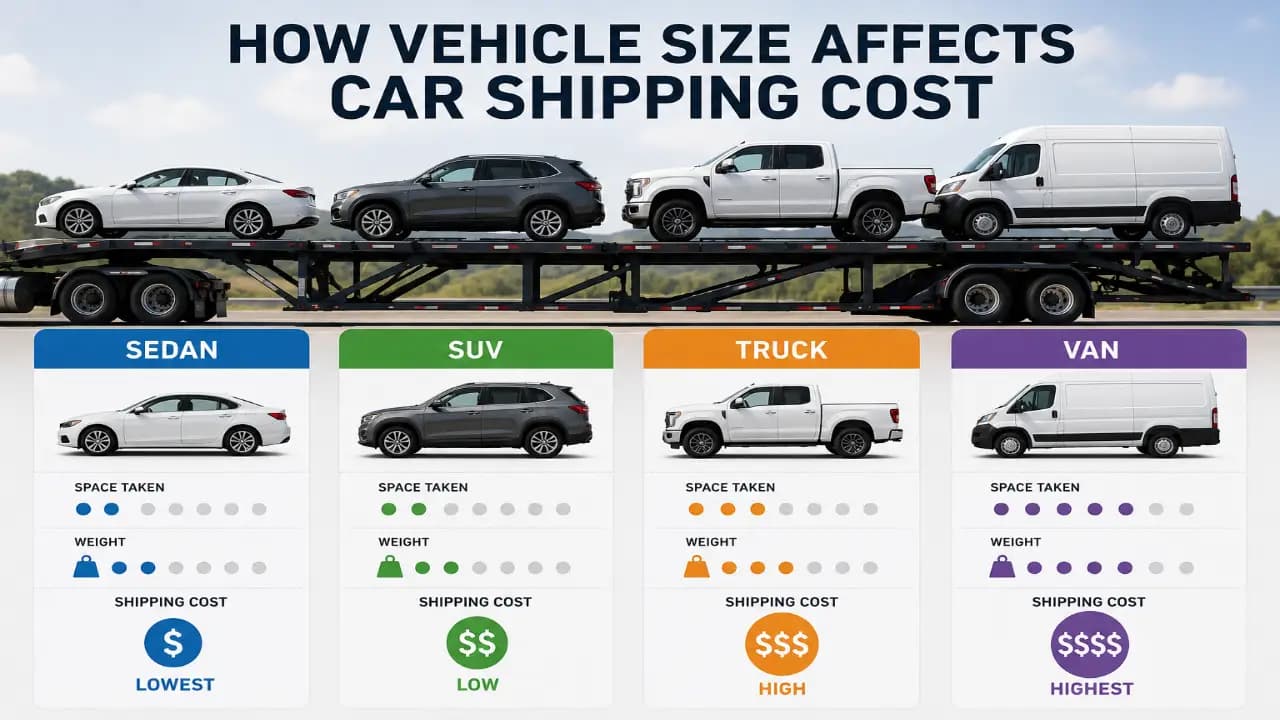
The rapid growth of EV adoption — Tesla, Rivian, Lucid, GMC Hummer EV, Ford F-150 Lightning, and the expanding field — has created new shipping considerations. EVs are often 10-20% heavier than their ICE counterparts due to battery pack weight. This affects trailer capacity calculations and, in some cases, per-vehicle shipping rates. Additionally, carriers who are not familiar with EV-specific loading and securing requirements (regenerative braking behavior, charging status protocols, high-voltage safety) are not ideally suited to handle these vehicles.
Furious Auto Shipping has protocol-trained teams for EV-specific transport requirements. We understand battery management during loading, the importance of transport mode activation on Tesla models, and the securing requirements for the unique weight distribution profiles of battery-electric platforms. This is an area where working with an experienced, EV-aware provider is genuinely matter.