When Standard Transport Just Won't Do
For most vehicles, auto transport is a practical logistics problem: get the car from Point A to Point B safely and affordably. For classic cars, exotics, antiques, and collector vehicles, the calculus is fundamentally different. The vehicle isn't just transportation — it's an asset, an investment, a piece of history, or a lifelong passion project. The cost of a single scratch on an unrestored original-paint muscle car can exceed the cost of the entire shipping service. The failure to properly secure a low-slung supercar can cause irreversible undercarriage damage the moment it contacts a standard loading ramp. Standard transport protocols weren't designed for these machines, and standard transport companies often lack the expertise to handle them correctly.
This section is written specifically for collectors, enthusiasts, auction buyers, and show participants who need a higher tier of service. Furious Auto Shipping has handled everything from barn-find restorations to concours-condition Ferraris and everything in between.
Why Enclosed Transport Is Non-Negotiable for Classics
Open transport exposes your vehicle to the same environmental conditions as if you were driving it on the highway. Road debris, gravel, industrial particulates from passing trucks, UV radiation, rain, bird droppings — all of it. For a daily driver with a $30,000 replacement value, the mathematical risk of damage from any of these factors is low enough to accept in exchange for significantly cheaper shipping rates.
For a classically restored 1967 Ford Mustang Fastback with original-color paint, a fully documented, numbers-matching 1970 Chevelle SS 454, or a low-production exotic that spends most of its life at concours events — the stakes are completely different. One gravel chip on an unrestored original hood carries a damage value that can quickly approach the cost of shipping that car enclosed multiple times. Enclosed transport is simply the appropriate insurance decision for vehicles where any paint disturbance is catastrophic.
Soft-Tie vs. Hard-Tie Securing Systems
How your vehicle is secured to the transport trailer matters enormously for classic vehicles. Standard open transport securing methods use wheel clamps and chains — effective for modern vehicles but potentially problematic for classics with low-clearance body panels, running boards, rocker panels, or non-standard wheel configurations that don't accommodate standard clamps.
Premium enclosed transport for classic vehicles uses "soft-tie" systems: foam-padded, adjustable straps that wrap around the wheel or secure through designated tie points without ever contacting the vehicle's body or undercarriage. For extremely low-slung vehicles or vehicles with modified suspension, lift-gate loading (a hydraulic platform that brings the vehicle to carrier deck level) eliminates the ramp grinding risk that destroys front air dams and underspoilers during standard ramp loading.
Documentation Before Transport: The Collector's Protocol
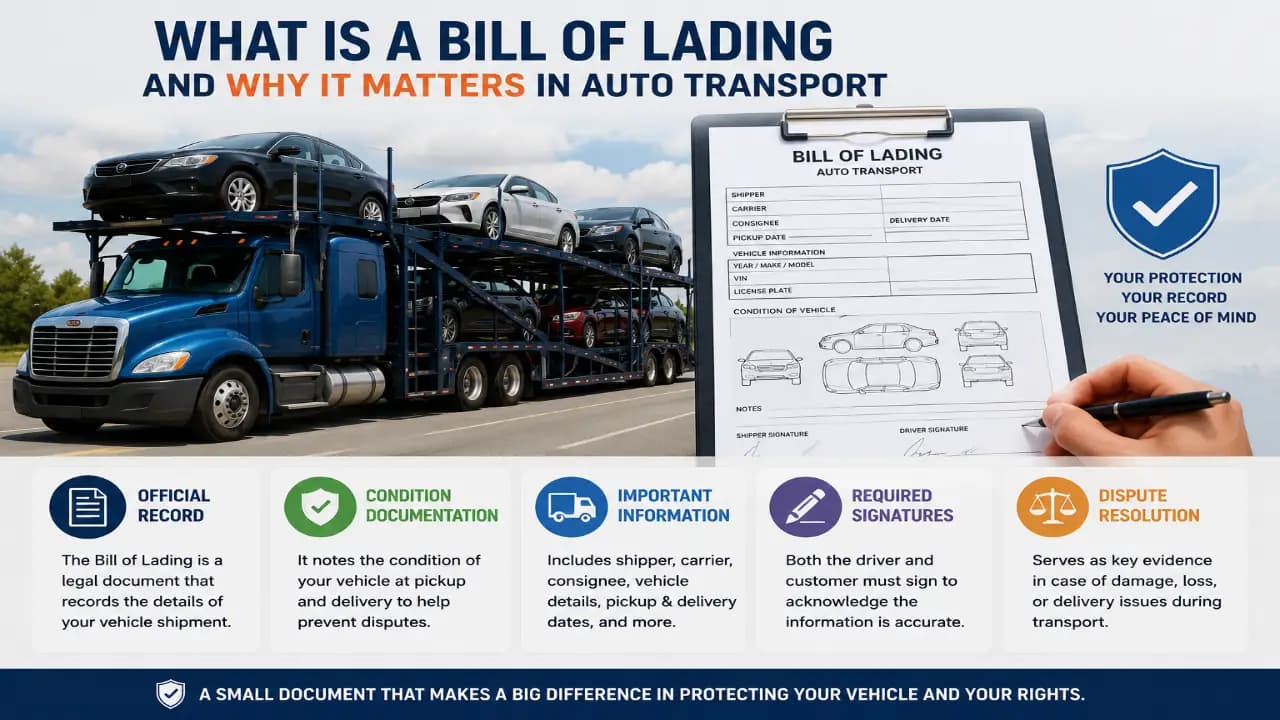
Standard shippers are advised to photograph their car before transport. Classic car collectors should approach pre-transport documentation as a professional appraisal process. Every panel photographed in controlled lighting. Every documented unique feature (original VIN tags, date codes, casting marks) captured clearly. Paint condition documented with a gauge reading if available. Interior condition captured from multiple angles.
This documentation serves two purposes: it protects you with comprehensive evidence in the unlikely event of a transport incident, and it provides the carrier with a complete reference record of your vehicle's condition so that any discrepancy at delivery can be identified immediately and resolved without ambiguity.
Choosing the Right Carrier for Your Prized Vehicle
Not all enclosed transport carriers are created equal. Some have the equipment and experience to handle any vehicle confidently — hydraulic lift gates, soft-tie systems, climate-controlled options for ultra-rare vehicles, and drivers with specific classic car experience. Others are enclosed carriers primarily because they own an enclosed trailer, without the specialized knowledge that distinguishes premium classic car transport.
Ask the right questions: Does the carrier use soft-tie or hard-tie securing systems? Is a lift gate available for low-clearance vehicles? Can the driver provide references from previous classic car shipments? Is the enclosed trailer temperature-regulated or simply sealed? The answers will tell you whether you're working with a true specialist or a standard carrier with an enclosed trailer.