Can Dealerships Ship Cars to You? Here's the Truth
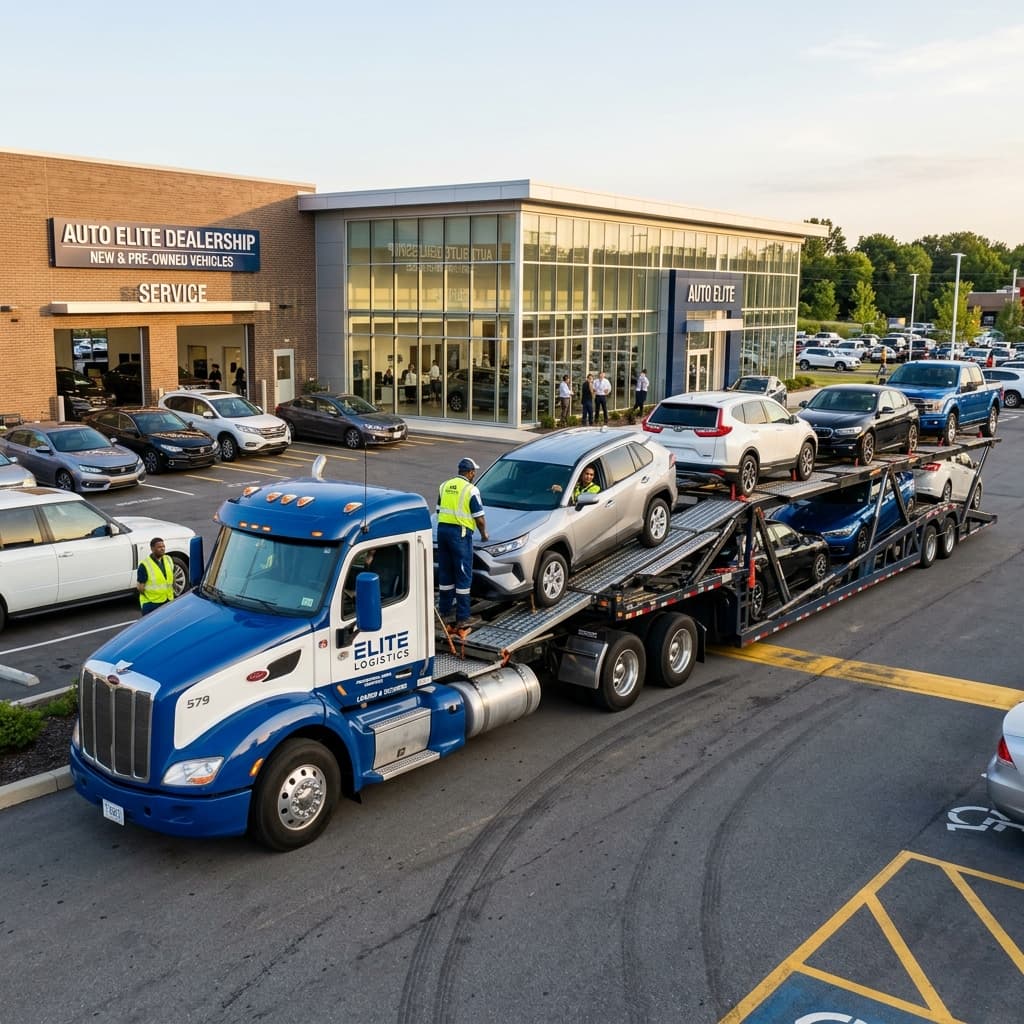
Table of Contents
- Do Dealerships Actually Ship Cars to Buyers?
- How Does Dealership Car Shipping Work, Step by Step?
- How Much Does It Cost to Have a Dealership Ship a Car?
- How Long Does It Take to Ship a Car from a Dealership?
- Should You Let the Dealer Arrange Shipping, or Book It Yourself?
- What to Watch Out For When Shipping a Car from a Dealership
- Open vs. Enclosed Carrier: Which Should You Choose?
- Can You Ship a Car You Haven't Picked Up Yet?
- Your Next Step: Get a Locked Quote Before You Commit
- Frequently Asked Questions
Quick answer: Yes, dealerships can ship cars to you — either through their own logistics or by hiring a third-party auto transport broker. The process typically takes 3–10 days depending on distance, costs $500–$1,800, and requires coordinating pickup, carrier assignment, and delivery to your door or a nearby terminal.
Buying a car from a dealership two states away used to mean booking a flight, spending a day at the lot, and driving home exhausted. That's changed. A growing number of buyers are purchasing vehicles entirely online or over the phone and having them shipped directly to their driveway — no road trip required.
But here's where it gets murky: not every dealership ships cars the same way, and "we can arrange shipping" doesn't always mean what buyers expect. Some dealers handle transport in-house. Others hand off the job to a broker. A few charge a flat fee; others tack on surprise surcharges at the last minute.
This guide breaks down exactly how dealership car shipping works, what it costs, how long it takes, and when it makes more sense to arrange your own auto transport — so you're not caught off guard after you've already signed the paperwork.
Do Dealerships Actually Ship Cars to Buyers?
Most franchise dealerships — and many independent ones — will ship a vehicle to a buyer who lives outside their local market. This became especially common after the COVID-19 pandemic accelerated the growth of online car buying platforms like Carvana, Vroom, and dealer-branded digital storefronts.
According to a 2023 Cox Automotive study, nearly 50% of car buyers now complete at least part of their purchase online, and demand for vehicle home delivery has increased alongside that shift. Dealers that once relied entirely on walk-in traffic have adapted.
That said, "shipping" looks different depending on the dealership:
- In-house transport: Larger dealer groups with multiple locations sometimes move inventory on their own trucks, particularly between rooftop locations.
- Third-party brokers: Most dealers outsource to an FMCSA-licensed auto transport broker, who then assigns a carrier from a network of drivers.
- Hybrid arrangements: Some dealers coordinate the paperwork but ask the buyer to handle the final transport booking directly.
If a dealer quotes you a shipping fee, always ask: who is actually carrying the car, what insurance covers it during transit, and what happens if it arrives damaged?
How Does Dealership Car Shipping Work, Step by Step?
The mechanics are straightforward once you understand the chain of custody.
Step 1: The dealer or buyer arranges a carrier
Once the sale is finalized, either the dealership contacts an auto transport broker or the buyer does. The broker searches a load board — a live marketplace of available carriers — and assigns a driver whose route passes through the origin and destination.
Step 2: Pickup is scheduled
The assigned carrier contacts the dealership to confirm a pickup window. This is usually 24–72 hours after booking, though high-demand routes or rural locations can extend that to a week.
Step 3: The vehicle is inspected and loaded
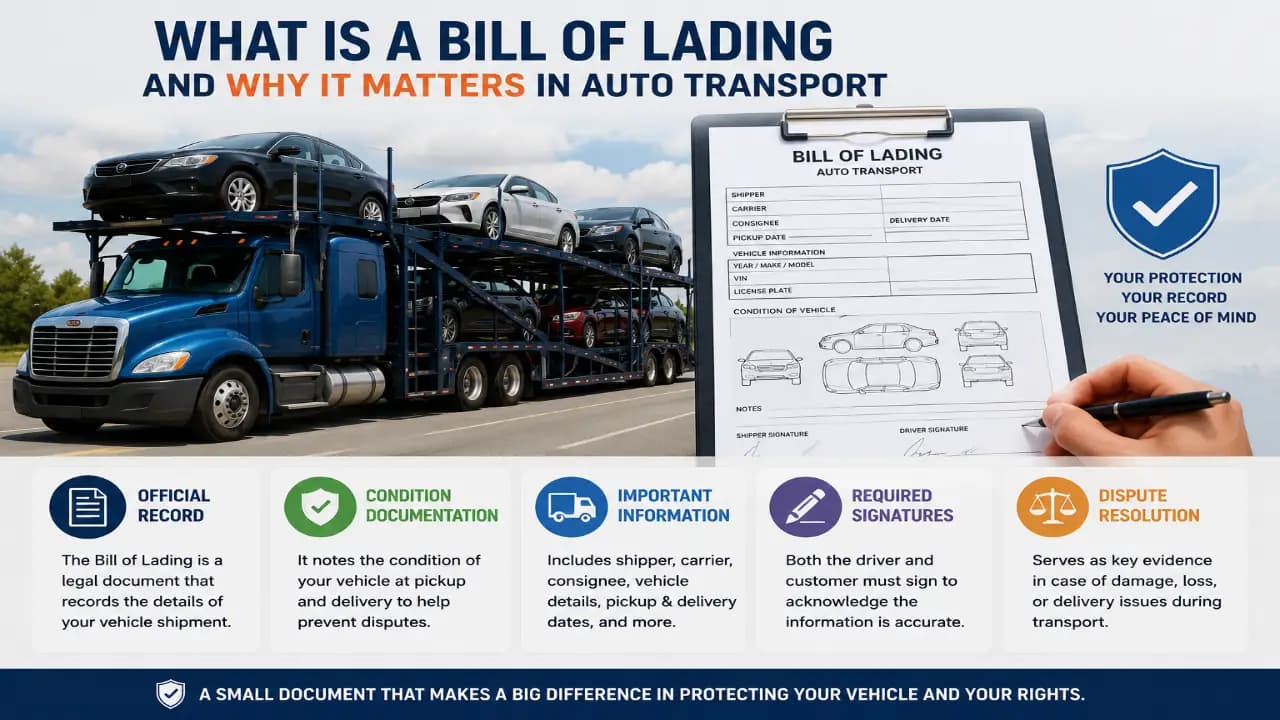
Before the car leaves the lot, a Bill of Lading is completed. This document records the vehicle's condition — existing dings, scratches, mileage — at the moment of pickup. Keep a copy. If anything changes between pickup and delivery, the Bill of Lading is your primary evidence for filing an insurance claim.
Step 4: Transport and tracking
Your vehicle travels on either an open carrier (the same multi-car haulers you see on highways) or an enclosed trailer (used for luxury vehicles, classics, and exotics). Most reputable carriers provide GPS tracking and periodic status updates throughout the journey.
Step 5: Delivery and final inspection
The driver delivers to your address — or a nearby terminal if door-to-door isn't available on your route. You complete a second inspection against the original Bill of Lading, sign off, and take the keys.
How Much Does It Cost to Have a Dealership Ship a Car?
Shipping costs vary based on distance, carrier type, route popularity, and timing. Here's a realistic breakdown for common US routes:
| Route | Distance | Open Carrier Estimate | Enclosed Carrier Estimate |
|---|---|---|---|
| Texas → California | ~1,400 mi | $950–$1,200 | $1,450–$1,750 |
| Florida → New York | ~1,150 mi | $900–$1,150 | $1,300–$1,600 |
| California → New York | ~2,800 mi | $1,400–$1,800 | $2,100–$2,600 |
| Chicago → Los Angeles | ~2,000 mi | $1,200–$1,500 | $1,700–$2,100 |
Estimates based on current market rates. Final pricing depends on vehicle specs, seasonal demand, and exact locations.
When a dealership arranges shipping on your behalf, they may mark up the transport cost by $100–$300 as a handling fee. Buyers who book their own transport through a licensed broker often pay less for the same service — and have more control over carrier selection and timing.
How Long Does It Take to Ship a Car from a Dealership?
Transit times depend primarily on distance:
- Short haul (under 500 miles): 1–2 days
- Mid-range (500–1,500 miles): 3–5 days
- Cross-country (1,500+ miles): 7–10 days
Factor in an additional 1–3 days for carrier assignment before the vehicle even gets picked up. On popular routes — Florida to New York, California to Texas — carriers are more readily available, which compresses the booking-to-pickup window. On less-traveled corridors, you may wait longer.
Seasonal timing also matters. October through January is peak season for snowbird routes (Northeast and Midwest into Florida and Arizona). Booking 1–2 weeks ahead during these windows can save $150–$300 compared to last-minute rates.
Should You Let the Dealer Arrange Shipping, or Book It Yourself?
This is the question most buyers don't think to ask — and it's worth thinking through carefully.
Let the dealer arrange shipping if:
- The dealership has an established relationship with a reputable transport company and can provide carrier insurance details in writing.
- The transport cost is already bundled into your deal at a fair rate.
- Convenience matters more to you than price optimization.
Book your own transport if:
- The dealer's shipping quote seems inflated or includes vague fees.
- You want to choose your carrier type (open vs. enclosed) based on your vehicle's value.
- You're buying from a private seller or an auction, where shipping isn't offered by default.
Booking directly through an FMCSA-licensed auto transport broker gives you a direct line to your dispatcher, a locked quote with no surprise surcharges, and full visibility into which carrier is assigned to your vehicle. Companies like Furious Auto Shipping — which has been coordinating auto transport nationwide since 2015 — offer $0 upfront deposits, meaning you pay nothing until a specific carrier is assigned and your pickup date is confirmed.
What to Watch Out For When Shipping a Car from a Dealership
The auto transport industry has its share of bad actors. Here are the red flags to know before you hand over a deposit:
- Upfront deposits before carrier assignment: Legitimate brokers charge a deposit only after they've confirmed a specific driver for your load. A broker asking for $200–$400 at the moment of booking — before any carrier is assigned — is a warning sign.
- Quotes that rise at pickup: "Bait and switch" pricing, where the quote given over the phone jumps by hundreds of dollars when the driver arrives, is a known industry problem. Ask for written, quote-locked pricing before confirming.
- No FMCSA broker number: Every licensed auto transport broker in the US must hold an active Motor Carrier (MC) number registered with the Federal Motor Carrier Safety Administration. You can verify any broker's status at the FMCSA SAFER portal in under two minutes. If a broker won't share their MC number, keep looking.
- Vague insurance information: Ask specifically: What is the carrier's cargo liability limit? Does it cover the full value of my vehicle? Get the answer in writing. Reputable carriers carry at least $1,000,000 in cargo liability per load.
Open vs. Enclosed Carrier: Which Should You Choose?
Most vehicles ship on open carriers — the multi-level trailers commonly seen on interstates. Open transport is the more cost-effective option and is perfectly safe for daily drivers, standard sedans, SUVs, and trucks.
Enclosed transport is worth the premium for:
- Luxury vehicles (BMW, Mercedes-Benz, Porsche)
- Classic or collector cars
- Electric vehicles (EVs) with low ground clearance, like the Tesla Model S
- Show cars and custom builds
Enclosed trailers provide full protection from weather, road debris, and dust. The cost premium runs roughly $400–$700 more than open transport, depending on the route.
Can You Ship a Car You Haven't Picked Up Yet?
Yes. One of the most common dealership shipping scenarios is a buyer purchasing remotely — often at an auction, through a dealer's online inventory, or via a manufacturer's build-and-order program — and having the vehicle shipped directly from the dealership or auction house.
In this case, the transport company picks the vehicle up directly from the dealership and delivers it to your door. You never visit the lot. The Bill of Lading at pickup serves as your condition record, and the final inspection at delivery is your chance to confirm the vehicle arrived as described.
This arrangement works well for dealer inventory transfers too. Franchise groups routinely move vehicles between rooftop locations using the same open-carrier network, which is why working with a broker that has deep carrier relationships — like a nationwide network of FMCSA-registered carriers — matters for scheduling flexibility.
Your Next Step: Get a Locked Quote Before You Commit
Shipping a car doesn't have to be complicated. Whether you're having a dealership coordinate transport or arranging it yourself, the fundamentals are the same: verify the broker's FMCSA credentials, confirm insurance coverage in writing, and make sure your deposit isn't charged until a carrier is actually assigned.
Furious Auto Shipping has been handling exactly this kind of transport since 2015 — with FMCSA-verified carriers, cargo-insured transit, and a documented Bill of Lading at pickup and delivery. There's no upfront deposit, no hidden fees, and a real dispatcher assigned to your shipment from booking through delivery.
Get a free, no-deposit quote at furiousautoshipping.com or call 1-918-255-5904 for a custom estimate.
Frequently Asked Questions
Can any dealership ship a car to me, or only certain ones?
Most dealerships — franchise and independent — can arrange shipping to a buyer's location, either through an in-house logistics team or by coordinating with a third-party auto transport broker. Some smaller dealers may not offer this service, so it's worth confirming before finalizing a remote purchase.
How do I know if the dealer's shipping quote is fair?
Get at least one independent quote from a licensed auto transport broker before accepting the dealer's rate. If the dealer's fee is more than $200–$300 above the independent quote, you're likely paying a handling markup. Booking directly with a broker often saves money and gives you more control.
Is my car insured while being shipped from a dealership?
Yes, as long as the carrier holds active cargo liability insurance — which all FMCSA-licensed carriers are required to carry. Ask for the specific coverage limit in writing before transport begins. Reputable carriers carry at minimum $1,000,000 in cargo liability per load.
What documents do I need when receiving a car shipped from a dealership?
You'll need a copy of the original Bill of Lading (completed at pickup) to compare against the vehicle's condition at delivery. If there's any damage, note it on the delivery Bill of Lading before signing and photograph everything. This documentation is required to file a cargo insurance claim.
Can a dealership ship a car to another state?
Yes. Dealership-to-buyer shipping across state lines is standard practice. Interstate auto transport is regulated by the FMCSA, and carriers must hold valid authority to operate across state lines. There are no additional fees for crossing state borders.
How far in advance should I book auto transport when buying from a dealership?
Book 5–7 days before your desired pickup date on popular routes. For less-traveled corridors, rural areas, or peak seasonal windows (snowbird season from October through January), allow 10–14 days to secure a carrier at competitive rates.
About the Author
Sarah Williams
Sarah is a logistics expert with over 20 years of experience in the auto transport industry.
Related Articles

How to Choose the Right Car Shipping Company and Avoid Costly Mistakes
Not every FMCSA-licensed broker is worth booking. Here's how we recommend evaluating car shipping companies — the checks, the red flags, and the industry nuances most customers never hear about.
What Is a Bill of Lading and Why It Matters in Auto Transport
The bill of lading is your legal protection in every car shipment. Learn what it documents, how to read it, and why inspection notes make or break a damage claim.
Ready to Ship Your Vehicle?
Get an instant quote for professional auto transport services.
Get Free Quote